

Today we will be exploring the world of Nihilism. Albeit with a slight twist! In this post you’ll find both famous nihilistic authors, as well as some that use these themes in a positive or rather, optimistic lens thanks to the generative AI google uses.
While some of them aren’t COMPLETELY BLEAK and BROODING, or flagrant Nihilists at heart, they have themes that encapsulate a message akin to nihilism in their work.
I’ve gone through and decided to give you some of their most famous works alongside the post, hopefully it’ll encourage you to read more.
If you are unfamiliar with Nihilism, Check out my post here for an In-depth Journey!
TL;DR “Nihilistic” refers to a world view of Nihilism, it means rejecting all religious and moral principles/values in the belief that life is meaningless .
1. Emil Cioran, The Most Infamous Of The Nihilistic Philosophers
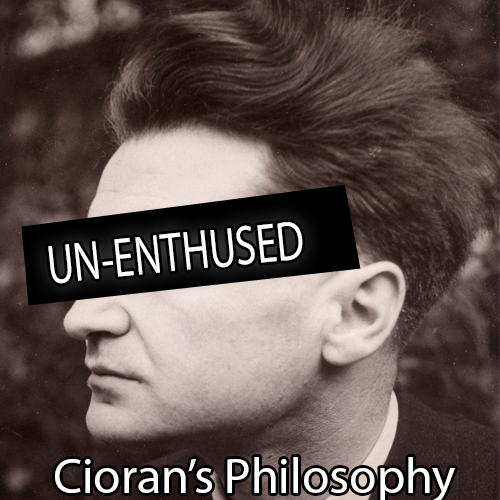
I think Emil Cioran is most known for his deeply pessimistic outlook on life, his writings STRONGLY resonate with themes of existential despair and the futility of human existence.
“The Trouble with Being Born” is a compelling and RAW exploration about the burdens of consciousness and the inherent suffering of life.
While he’s not the Head honcho on the discussion of Nihilism
(that’s a title often reserved for our next up on the list)
I think most people who search for Nihilism/ Nihilistic Philosopher are seeking something akin to this:

Cioran ruthlessly explains that existence itself is a curse in almost everything he writes.
The Trouble with being born articulates the paradox of being alive, where the mere act of existing is filled with inevitable suffering and disillusionment.
This theme is a cornerstone of Cioran’s philosophy, positioning him as THE renowned Modern Nihilist.
Central to Cioran’s thesis is the idea that consciousness is not a gift but a burden. He argues that awareness amplifies human suffering, making individuals acutely aware of their existential plight. This pessimistic worldview is not merely about the absence of meaning but also about the debilitating effects of being aware of life’s inherent absurdity. “The Trouble with Being Born” serves as long drawn conversation on the human condition, and it is NOT very light or very hopeful.
Cioran’s writing style is marked by its precision and intensity.
He’s succinct, yet deeply impactful, there’s sharp and rough parallels behind ideology and the real world.
This raw and eloquent approach has solidified his influence on nihilistic works and ideology, and his books may heavily resonate with anyone who grapples with the darker aspects of human existence.
Through his books, Cioran has been the largest and most undeniably powerful in the discourse surrounding nihilism and pessimism, offering a stark but real critique of life that’s hard to find elsewhere in books, especially at the time it was written.
2. Friedrich Nietzsche – ‘Thus Spoke Zarathustra’

Friedrich Nietzsche is by far one of the most famous writers of all time in the world of modern philosophy.
One of his most influential writings, ‘Thus Spoke Zarathustra,’ epitomizes a lot of idea’s he had felt necessary to share.
However; I feel obligated to point out, that despite his professed nihilism, this book can aim to be a wonderful way to posit ideas around it’s avoidance.
His perspective actually provides a recipe against such stark nihilism that is shown in later writings that affirm this position.
Nietzsche’s interpretation of nihilism is not as starkly present and infact thus spoke zarathustra is actually a rejection of established values and an invitation to re-evaluate and forge new ones.
‘Thus Spoke Zarathustra’ is a novel that follows a man named Zarathustra as he embarks on a journey of self-discovery and enlightenment.
Through Zarathustra, Nietzsche explores the idea that traditional values and beliefs, have become obsolete.
You can’t mention Thus spoke Zarathustra without bringing up the “God is Dead.” line, so I’ll use this as a way to introduce some of you to a band called “Nine Inch Nails” where we go full Nietzsche in “Heresy“.
The themes present in ‘Thus Spoke Zarathustra’ are deeply intertwined with the notion of self-overcoming. The books’ philosophy is expanded upon by the concept of the ‘Übermensch’ or ‘Overman,’ which embodies the ideal of a person who transcends conventional morality to create their own values and purpose.
Nietzsche posits that individuals must continually strive to surpass themselves, overcoming internal and external obstacles to achieve personal growth and fulfillment.
This journey towards self-overcoming is not a linear path but a cyclical process of perpetual transformation and renewal. It is through this relentless pursuit of self-improvement that one can aspire to the ideal of the Übermensch.
The idea of creating and finding a way to create value or things worth living is moreso in line with existentialism or aburdism.
Despite being conflated with Nihilism by the popular public opinion, his best seller seems to present an entirely different perspective, which I think is fantastic for allowing us to expand our lens of reading.
Personally, i think his greatest nihilistic work is On the Genealogy of Morals, if you want a good video discussing it, click here!
3. Arthur Schopenhauer – ‘The World as Will and Representation’
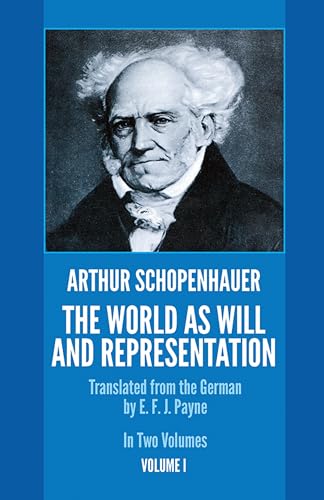
Arthur Schopenhauer’s seminal work, ‘The World as Will and Representation,’ stands as a cornerstone in the realm of nihilistic philosophy.
In Schopenhauer’s magnum opus, he also examines into the topic of “human existence”, exploring the intrinsic nature of reality and our subjective experiences within it. Central to his philosophy is the concept of the ‘will to live,’ an insatiable and irrational force that drives all living beings. According to Schopenhauer, this relentless will is the root cause of suffering, leading to a deeply pessimistic view of existence.
Schopenhauer posits that the world we perceive is not an objective reality but rather a representation formed by our individual consciousness. He argues that our experiences are filtered through the subjective lens of our own desires and perceptions, rendering true objectivity unattainable. This challenges the conventional understanding of our reality, suggesting that what we perceive as the world is merely a projection of our inner will.
One of the most striking ideas in Schopenhauer’s philosophy is the assertion that true happiness is ultimately unattainable. He contends that the will to live perpetuates a cycle of desire and dissatisfaction, where the fulfillment of one desire only gives rise to another. This perpetual state of longing and striving leads to an existence marred by suffering and discontentment.
In Schopenhauer’s view, the only respite from this cycle lies in the denial of the will, a form of asceticism that seeks to transcend the incessant demands of desire.
Schopenhauer’s ideas have had a strong influence on later nihilistic and existentialist thinkers. His exploration of the human condition and the nature of reality resonated with philosophers such as Friedrich Nietzsche and Albert Camus, who further developed and expanded upon his themes. Schopenhauer’s contributions to nihilistic philosophy continue to be a subject of scholarly interest, offering a bleak yet compelling perspective that continues to be a necessary component of thought in this realm.
4.Jean-Paul Sartre – ‘Being and Nothingness’

Jean-Paul Sartre, a household name in existential nihilism, was making waves with his largely worded, Being and Nothingness. Central to Sartre’s philosophy is the principle that “existence precedes essence.” It posits that individuals are not born with a pre-determined purpose or essence; instead, they must forge their own meaning within an inherently meaningless universe. This radical freedom to define oneself comes with immense responsibility, as each person must navigate their own path without any inherent guidelines or assurances.
In Being and Nothingness, Sartre delves into several key concepts that underpin his existentialist framework. “Bad faith” is one such concept, referring to the human tendency to deceive oneself to avoid the anguish associated with absolute freedom and responsibility. Individuals in bad faith deny their own freedom and culpability, often conforming to societal norms and expectations rather than embracing their authentic selves.
Another crucial idea Sartre explores is “nothingness,” (i know I know… we would hope right? but I promise it’s actually very meaningful) he perceives nothingness as the backdrop against which human freedom is exercised. It’s not just the *absence* of something, but a fundamental aspect of human consciousness that allows individuals to envision possibilities beyond their current reality. This conceptualization of nothingness underscores the boundless potential for self-definition and transformation.
Sartre’s philosophical contributions extend beyond theoretical discourse, radically influencing existentialist and nihilistic thought. His emphasis on individual freedom, choice, and the inherent responsibility that accompanies these elements has made innumerable waves. While many existentialist writers and thinkers build upon Sartre’s ideas, they typically focus on psychology, other forms of literature, and political theory as opposed to existential nihlism.
That being said, Jean-Paul Sartre’s Being and Nothingness remains a cornerstone of existential nihilism, His work prompts a reevaluation of human existence’s fundamental aspects and the intricate interplay between freedom, responsibility, and authenticity.
Much like our last (and my personal favorite) author.
5. Albert Camus – ‘The Myth of Sisyphus’

Albert Camus’s seminal “nihilistic” work, ‘The Myth of Sisyphus,’ stands as a lynchpin into the exploration of nihilistic philosophy. However, I do NOT agree with Google AI in calling him a nihilist.
In “The Myth of Sisyphus and other essays”, Camus delves into the concept of the ‘absurd,’ a central theme in his philosophical inquiries.
The absurd arises from the juxtaposition of humanity’s relentless search for meaning and the unresponsive, indifferent universe. Camus posits that life is inherently devoid of purpose, a notion that aligns closely with nihilistic thought. Which is why I assume that a “nihilist philosophers” search puts him at a top list… please don’t trust AI.
Anyway.. Camus’s response to this existential predicament deviates from classical nihilism.
Rather than succumbing to despair, he advocates for embracing life’s inherent meaninglessness. This stance is encapsulated in the metaphor of Sisyphus, a figure from Greek mythology condemned to eternally push a boulder up a hill, only for it to roll down each time he reaches the summit. For Camus, Sisyphus’s ceaseless struggle symbolizes the human condition. The repetitive and futile task mirrors humanity’s own quest for significance in an indifferent world.
This is the separation of Nihilism into a different path, called Absurdism.
Feel Free to Learn more About Absurdism in my post here!
Camus’s revolutionary idea is to find personal meaning through rebellion and persistence. He suggests that, despite the absurdity of existence, one can choose to live with passion and intensity. In this light, the act of rebellion against the absurd becomes a source of personal empowerment. By continually striving and confronting the absurd, individuals can carve out their own sense of purpose and fulfillment.
Camus’s assertion that “one must imagine Sisyphus happy” profoundly impacts both existential and nihilistic philosophy. This perspective encourages a shift from seeking external validation to fostering an internal sense of satisfaction on matters. His broader influence extends beyond ‘The Myth of Sisyphus,’ permeating his other works on both existentialism and nihilism. His philosophy mostly advocates for a life lived with authenticity and courage, even in the face of an indifferent universe.
While Absurdism and nihilism are very closely paralleled, absurdism seems to allow for more glimmers of hope.