
What Is the Brain in a Vat Thought Experiment?
Imagine that everything you have ever experienced every friendship, every sunrise, every achievement, every disappointment—is nothing more than a sophisticated illusion.
Imagine that your body does not exist.
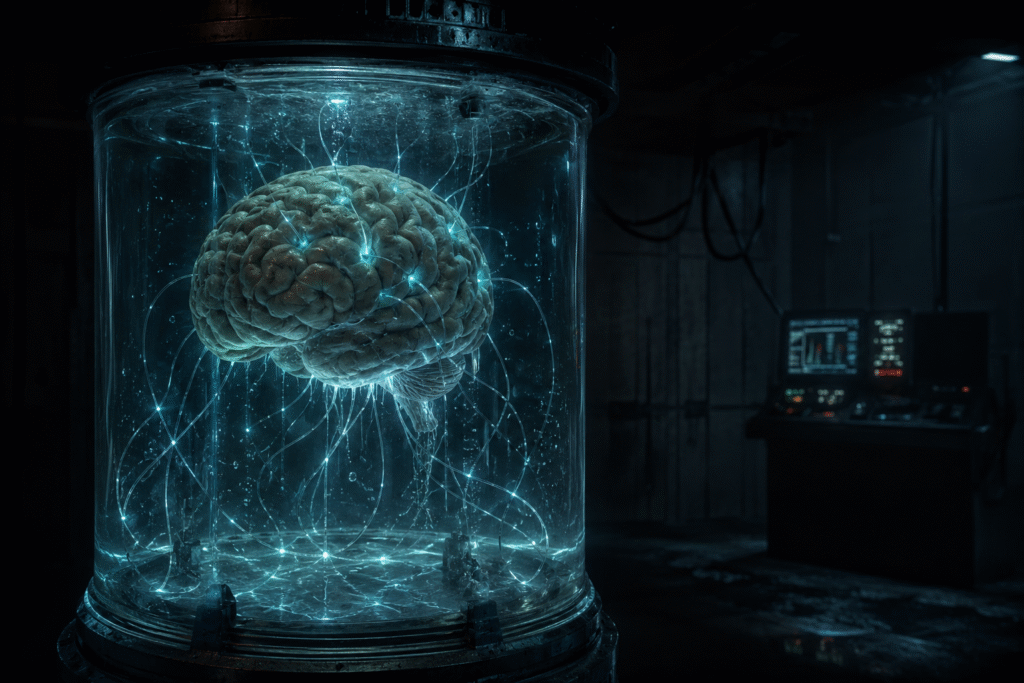
Imagine that your entire conscious experience is being generated by a supercomputer while your brain floats in a laboratory vat connected to countless wires.
How would you know?
More importantly, could you ever know?
This is the unsettling question at the heart of The Brain in a Vat, one of the most famous philosophical thought experiments in modern epistemology. Although it sounds like science fiction, the thought experiment raises profound questions about knowledge, reality, consciousness, and the limits of human certainty.
The Brain in a Vat challenges some of our deepest assumptions about the world and forces us to confront a possibility that many of us would rather ignore: what if reality is not what it seems?
How Does the Brain in a Vat Thought Experiment Work?
The Brain in a Vat thought experiment asks us to imagine the following scenario:
A person’s brain is removed from their body and placed inside a nutrient-filled vat that keeps it alive.
The brain is connected to a highly advanced computer capable of sending electrical signals identical to those normally received from the body’s sensory organs.
The computer perfectly simulates reality.
The brain experiences sights, sounds, smells, emotions, and physical sensations exactly as it would if it were still connected to a living body.
From the brain’s perspective, nothing appears unusual.
The person believes they are walking through cities, talking to friends, eating meals, and reading articles.
In reality, none of these things exist.
Everything is just a complex computer-generated simulation.
The central question becomes perplexing: How could the brain discover that it is a brain in a vat?
If every piece of evidence available to the brain comes from the simulation itself, then any attempt to verify reality would also be part of the illusion.
The Origins of the Brain in a Vat

Although the phrase “Brain in a Vat” emerged in more recent years, the idea has much older roots.
Philosophers have long questioned whether our senses provide genuine knowledge of the external world.
Some of the earliest examples include:
Plato’s Allegory of the Cave
René Descartes’ Evil Demon argument
George Berkeley’s idealism
Modern simulation theories (Putnam)
The Brain in a Vat is essentially a technological update to these older skeptical challenges.
Instead of an evil demon deceiving us, we now imagine a supercomputer generating our experiences.
In my opinion it’s more grabbing due to the lack of “supernatural” elements and is more easily grounded for most given the current era of AI we live in.
The underlying concern remains the same:
Can our experiences ever prove that reality exists independently of our minds?
Descartes and Radical Skepticism
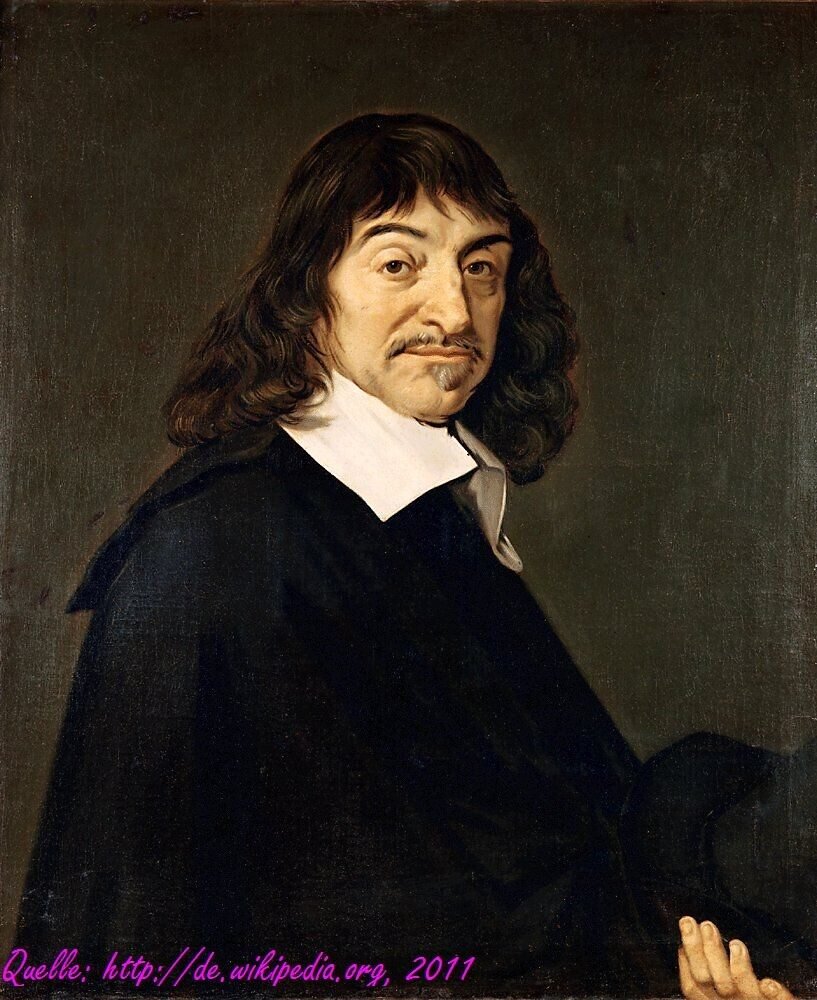
To understand the Brain in a Vat, it helps to understand René Descartes.
In the seventeenth century, Descartes sought a foundation for knowledge that could not be doubted.
To accomplish this, he systematically questioned everything.
He is famously known for honing in on some of the most important points of skepticism.
“The senses sometimes deceive us.
Dreams can feel indistinguishable from waking life.
A powerful deceiver could potentially manipulate our perceptions.”
The last point is by his most important and well regarded thought experiment.
Descartes imagined an “evil demon” capable of creating false experiences while making them appear completely real.
This thought experiment led him to his famous conclusion:
“Cogito, ergo sum” or more widely known as “I think, therefore I am.”
Even if everything else is an illusion, the fact that one is thinking affirms at the very LEAST that the thinker exists.
The Brain in a Vat is a sort of modern twist of Descartes’ concern by replacing the evil demon with advanced technology.
Why the Brain in a Vat Matters
At first glance, the Brain in a Vat may seem like a bizarre hypothetical with little relevance to everyday life.
I would argue not so true. At it’s core, it addresses one of philosophy’s most important questions:
What does it mean to know something?
Most of us assume we know basic facts such as:
The Earth exists.
Other people exist.
Our bodies exist.
Physical objects exist.
However, if the Brain in a Vat scenario is possible, then our experiences alone may not be enough to justify these beliefs.
This leads to a skeptical challenge:
If all of our evidence comes through perception, and perception could be manipulated, then how can we establish certainty about the external world?
Can We Ever Prove Reality Exists?

Now this is at the heart of it all. Something we have been yearning to do since the dawn of rationale thought. (and probably even before thought was rational for most)
Consider a simple example.
You look at a tree outside your window.
You might think this proves the tree exists.
However, the Brain in a Vat argument points out that if a computer generated the image of the tree, your experience would be identical.
The evidence remains exactly the same.
The problem is not whether the tree exists.
The problem is whether experience alone can distinguish reality from illusion.
Many philosophers conclude that absolute certainty may be impossible.
We can have strong justification for our beliefs, but complete proof may forever remain beyond our reach.
Hilary Putnam’s Famous Response
The Brain in a Vat thought experiment became especially influential through philosopher Hilary Putnam.
Putnam argued that the scenario contains an unexpected problem.
According to his theory of meaning, words refer to things because of their causal relationship to the world.
For example, when we say “tree,” our word refers to actual trees because we interact with real trees.
But imagine a genuine brain in a vat.
The brain has never encountered real brains or real vats.
Everything it experiences is simulated.
Putnam argued that in this situation, when the brain says “brain” or “vat,” those words would refer only to simulated objects within the virtual environment.
Therefore, when the brain claims:
“I am a brain in a vat.”
The statement would actually mean:
“I am a simulated brain in a simulated vat.”
As a result, the statement cannot successfully describe its own condition.
Putnam believed this creates a logical problem that undermines radical skepticism.
The Brain in a Vat and The Matrix
Few philosophical ideas have influenced popular culture as much as the Brain in a Vat.
And let me tell you, nothing does it like The Matrix. (it has been in my top 5 movies of ALL time for over a decade due to the IMMENSE symbolism!)
The 1999 film “The Matrix” introduced millions of people to basically this entire thought experiment.
In the film:
Human bodies exist in pods.
Machines control reality.
Conscious experience occurs within a simulation.
Most people remain unaware of the deception.
The Matrix essentially asks the same question as the Brain in a Vat:
Would you be able to tell if your reality was artificial?
The film’s popularity demonstrates how deeply this philosophical problem resonates with people.
We are at the very least, entertained by such philosophical questions… when we are shown action and accompanying drama.
It speaks to a universal concern about truth, authenticity, and the possibility of deception.
While it seems absolutely childish and off the walls… let it sit with you a bit (especially the spoon scene.)
Also! Just really quick, it is FREE on YOUTUBE at the moment, go give it a watch!
(link here, don’t worry its a YouTube link, if you don’t trust blog links, search for yourself!)
Is the Simulation Hypothesis the Same Thing?
The Brain in a Vat is often compared to the modern Simulation Hypothesis proposed by philosopher Nick Bostrom.
The Simulation Hypothesis essentially argues that advanced civilizations may eventually possess enough computing power to create realistic simulations of conscious beings.
If many such simulations exist, then statistically speaking, we may be more likely to inhabit a simulation than base reality.
The two ideas differ in very subtle, but genuinely important ways in which they derive value in thought.
The Brain in a Vat is primarily used as an epistemological challenge designed to test our assumptions about knowledge and is useful, in some regards, when considering the simulation hypothesis.
The Simulation Hypothesis, at its core, is a metaphysical claim about what reality might actually be.
Given that if we can imagine we are in a “Simulation”, we could also conceive that we are also just brains in vats. They both question fundamental reality in particular and important ways.
We could find synergy between these two points for building on each other.
To make the take away easier to understand:
Brain in a vat could be reduced down to:
How would we know?
While Simulation theory can posit something akin to:
Given it’s possible, what if it’s true?
Criticisms of the Brain in a Vat

Not all philosophers accept the skeptical conclusions of the thought experiment.
Several objections have been proposed.
Take a gander below.
Common Sense Realism
Some philosophers argue that skepticism sets an impossibly high standard for knowledge.
We do not require absolute certainty to know things.
Instead, knowledge may simply require sufficient evidence.
Since our everyday experiences consistently support the existence of the external world, skepticism becomes unnecessary.
Pragmatism
Pragmatists argue that beliefs should be evaluated based on their practical consequences.
Whether we are brains in vats or not makes little difference to daily life.
We must still make decisions, build relationships, and navigate experiences.
Therefore, the skeptical question may have limited practical significance.
Externalism
Some epistemologists argue that knowledge depends on reliable causal connections with reality rather than conscious access to proof.
If our perceptions generally arise from real objects, then we can possess knowledge even if we cannot eliminate every skeptical possibility.
What the Brain in a Vat Reveals About Consciousness
Beyond skepticism, it raises important questions about consciousness itself.
If a brain connected to a computer can have experiences indistinguishable from ordinary life, then consciousness appears to depend heavily on thing like information processing.
This insight has a myriad of implications and discussions surrounding innumerable topics.
- Artificial intelligence
- Virtual reality
- Cognitive science
- Neuroscience
- Philosophy of mind
All of the above have strong ties to what the implication of a brain in the vat are poking at.
We are forced to ask whether consciousness is tied to physical reality or whether experience alone constitutes reality for the conscious subject.
Why Philosophers Still Discuss the Brain in a Vat

Centuries after Descartes first raised similar concerns, philosophers continue debating the Brain in a Vat because it exposes a fundamental tension within human knowledge.
We rely on experience to understand reality.
Experience itself may be the very thing we cannot independently verify.
The Brain in a vat exposes the limits of certainty while encouraging intellectual humility.
It reminds us that some assumptions we take for granted may rest on foundations that are surprisingly difficult to justify.
Whether or not we are brains floating in vats, the challenge remains powerful because it forces us to confront the question:
What, if anything, can we know with absolute certainty?
Conclusion
I think it’s one of the most compelling thought experiments I’ve ever come across because it strikes directly at our confidence in reality.
By imagining a brain receiving perfectly simulated experiences, the thought experiment challenges our assumptions about knowledge, perception, and truth.
Since it’s conceivable, what’s not to say it isn’t in any sense possible?
Hilary Putnam and others have attempted to undermine the skeptical scenario, but the “Brain in a Vat” idea continues to inspire debates about consciousness, artificial intelligence, virtual reality, and existence itself.
I’d argue the most important lesson is not that we should doubt everything, but that certainty is far more elusive than it first appears.
The next time you look around at the world, consider the possibility, however remote, that every sight, sound, and sensation could be part of an elaborate illusion.
Then ask yourself:
How would you know?
It’s fun, maybe don’t go around prodding everyone for answers, but it’s a nice little treat we get for being aware of the possibility.
If you found this at all interesting, then maybe you’d like to read other topic’s I’ve touched on!
Maybe Existentialism!
Perhaps absurdism?
If you’re feeling particularly bleak, I’ve got some on nihilism as well!
Frequently Asked Questions
What is the Brain in a Vat thought experiment?
The Brain in a Vat is a philosophical thought experiment that imagines a person’s brain being kept alive in a vat while receiving simulated sensory experiences from a computer. It is used to explore skepticism and the limits of knowledge.
Who created the Brain in a Vat argument?
The modern version is most closely associated with philosopher Hilary Putnam, although its roots can be traced back to René Descartes’ Evil Demon argument and earlier skeptical traditions.
What is the main point of the Brain in a Vat?
The thought experiment questions whether our experiences can provide certain knowledge about an external reality. It challenges assumptions about perception, truth, and certainty.
Is the Brain in a Vat the same as The Matrix?
Not exactly. The Matrix is a fictional story inspired by similar philosophical ideas. Both involve simulated realities, but the Brain in a Vat is primarily a philosophical argument about knowledge.
Is the Brain in a Vat related to the Simulation Hypothesis?
Yes. Both involve the possibility that reality is not what it appears to be. However, the Brain in a Vat is an epistemological challenge, while the Simulation Hypothesis is a claim about the nature of reality itself.