
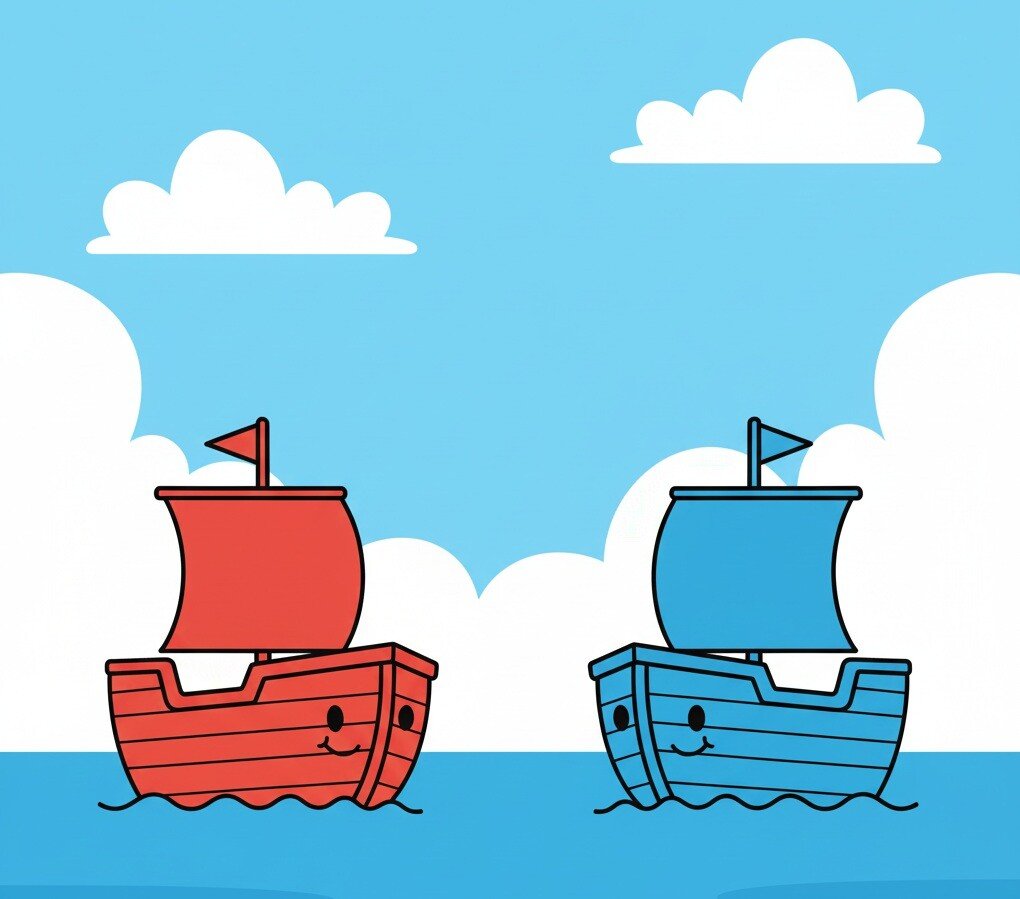
Introduction to the Ship of Theseus Paradox
The Ship of Theseus is a fantastic introduction in learning about “identity”.
It serves as a fun Philosophical thought experiment to have us question our beliefs!
It’s been a topic of discussion in various intellectual disciplines and especially in academic classrooms (like where I had learned about it in introduction to metaphysics)
This story dates back to Plato and later was explored by philosophers such as Heraclitus and Aristotle.
To summarize the story, Theseus was a hero of ancient Athens, and the ship that was named after him was revered as a symbol of his bravery and fortitude.
His ship held important symbolistic value beyond its role as a trusty stead over the seas.
In a certain sense, it’s more than a ship, it’s an extension of HIM that the entire city can look at and be reminded of his eternal glory.
However, as the ship exists, it becomes exposed to the harsh elements.
Treacherous waves and loads of the debris from the sea slowly begin to cause wear to the vessels body, degrading it over time.
Now, its very essence is put into question. If it rots away to nothing, what happens to this remarkable symbol? When do we no-longer consider it to be Theseus’ ship and just call it a collective pile of dilapidated wood and metal? If it no longer sails, we might say: “This WAS Theseus’ ship”, right?
Before we get to calling it “Junk”, let’s talk about fixing up Theseus’ ship.. like most people would do!
The Ship of Theseus Paradox and Identity transference
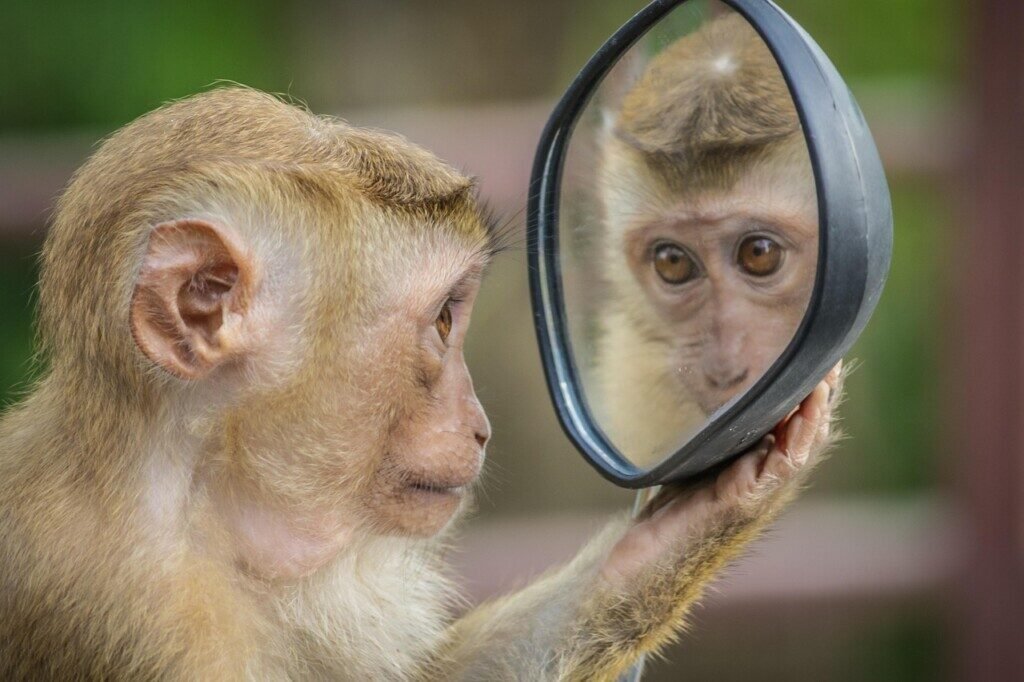
The ships maintenance and upkeep is the crux of our Paradox: Does gradually having the wooden parts replaced with new material make it a different ship? This also raises an intriguing question to follow:
If all components of the ship are replaced, is it still the same ship?
On it’s face, it seems to be fairly straightforward, but as we examine the nature of this paradox, we uncover more issues.
Allow me to explain it with a slight aside before we hammer away at this.
This problem of identity is central to a LOT of philosophical debates.
Many excellent philosophers have embarked on the quest of understanding what constitutes the “self” or an “entity” over time.
This problem has extended beyond philosophical theory and has woven itself into discussions about personal identity, the persistence of objects, and even the evolution of societal constructs, super cool to think!
Within Theseus’ ship we see questions arise about whether an object retains its identity when its constituents change entirely or partially.
For instance, if a single plank is replaced, does it retain its identity?
What if suddenly HALF of the ship is re-created? If not half, is the magic turning point 51%?
What happens if all parts are substituted in the exact same place, with identical looking pieces?
These all cause an incredibly lengthy debate on identity, both for objects and for people!
I’ll break this down in much more detail below, but hopefully from just the few most commonly asked questions MOST people would have, we can see its off to shaky waters (pun intention)
The Original Ship Of Theseus Paradox.
The paradox introduces a hypothetical scenario where the ship, originally built from wooden planks, undergoes gradual replacements over time.
As each wood plank rots, it is replaced with a new one of the same material. The crux of the paradox lies in determining whether the ship remains fundamentally the same entity after all its original components have been replaced. If every single plank is replaced, is it still the Ship of Theseus, or has it become something entirely different?
This raises significant questions about the nature of identity and the criteria that we define ‘sameness.’
This gives us one possible idea about identity: Ordinary objects survive “GRADUAL” change.
For an example of objects that survive “Gradual Change” let’s do the follow real-world example!
Assumption of Identity: Ordinary Objects (like the ship of Theseus) Survive gradual Change

Imagine we have discovered the painting was lost for ages and created back in 1642.
Upon this knowledge we decided to have it donated to a museum.
After we donate it, the museum has it authenticated, appraised, insured and displayed prominently.
If it is uncovered that the appraisal has listed this painting as being worth MILLIONS then we may have a concern for it’s safety.
With that news emerging, it’s not hard to assume that someone would try to steal the painting.
Imagine that a thief sneaks past security, breaks the display and successfully stuffs the painting in a bag.
As our thief is rushing past the museum staff and law enforcement is alerted, they fall onto the bag.
After the police apprehend the criminal and retrieve the painting, it is promptly returned.
Upon its return, the museum notes the thief created a small tear and some chips in the painting, despite careful extraction, due to the fall.
If the museum recovers the piece and has a skilled professional carefully tend to the piece and restore it, would we question that it’s NOT exactly the same painting?
The answer is widely accepted as NO.
The general consensus on objects existing small and or gradual replacement
This is because the changes are gradual, small, and don’t affect the integrity of the original work.
However; if almost 90% of the painting was destroyed by the thief and it needed to be completely reframed, we would say that the piece is more akin to a replica.
This is because we still acknowledge that the viewership of the painting has almost no immediately noticeable difference, but it is basically a recreation.
Additionally, despite any perceptibility shifts, we recognize things to survive gradual changes over periods of time as consistent as well.
For example: Changing out a broken window in a childhood home.
If in 10 years, a singular window and maybe the chimney in a house is changed, it’s still the *same* house in most peoples view.
Philosophical Implications of Material Change
The issue of material change can be examined through the lens of various philosophical theories, for example if we take the position of Heraclitus, we get a truly interesting take, he is purported to have said “you cannot step into the same river twice.” It’s a strong take that tells us that a river is not the same after it has been entered. It always evolves and is never the “same”. The idea, on a broader scale suggests that change is constant and inherent to existence, to use the language I think fits this idea well, we can imagine that identity is fluid rather than fixed. Which is something a lot of people would agree on over a long enough period of time.
In contrast to this position, John Locke’s philosophical perspectives provide a framework that can be utilized to understand personal identity.
Locke argued that identity is tied to consciousness and memory rather than the physical substance itself. So, if we apply Locke’s theories to the Ship of Theseus, we might say that the perception of identity lies not in the ship’s material components but in the continuity of its use and the memories everyone has associated with it. If our ship is gradually replaced, as necessary but can still be seen on the waters and standing as a testament to Theseus, then it is in fact still the “same.” Despite whatever changes happen to the body or any part of the ship, it still is experienced the same.
This shift in focus from a physical to an experiential understanding of identity poses a series of implications for how we consider the lasting essence of objects. Our questions surrounding material change now extend beyond objects and now linger into more abstract notions of “self” and broadly speaking even society.
For instance, as individuals undergo personal changes! Whether it comes through experiences, beliefs, or physical transformations, the inquiry into whether they remain the same person is evocative of the Ship of Theseus dilemma. These philosophical explorations compel us to rethink our assumptions about permanence and continuity against the nature of a constantly evolving reality.
Discussions and Controversies in the Philosophical Community

At the heart of our contentions is the question of whether an object’s identity is tied to its material composition or its continuity over time. It’s an interesting divergence of philosophies. We practically have the arguments surrounding this dilemma broadly categorized into two distinct schools of thought.
On one side, proponents of the continuity theory argue that identity is preserved through the persistence of form and function, regardless of the material changes that occur.
This perspective maintains that as long as an object continues to serve the same purpose and maintains a consistent design, its identity remains intact. Anyone who holds this view could cite examples from everyday life, such as a person who undergoes various bodily changes yet is recognized as the same individual. This perspective emphasizes the enduring nature of identity, suggesting that it is conceptual rather than being strictly tied to any series of physical components.
On the other end, there are those who advocate for the material identity theory. This position instead emphasizes the fundamental importance of the original materials in determining an object’s identity. According to this argument, once the components of the Ship of Theseus are replaced, it ceases to be the original ship, even if it retains the same appearance and functionality.
People on this side of this school of thought can posit philosophical questions concerning ownership and authenticity, wherein they argue that the essence of an object is intrinsically linked to its original materials. The debate further complicates things when considering cases like personal identity in which both physical and psychological continuity play a role in our understanding.
These main contrasting position basically sum up a majority of the tensions presented by the unresolved nature of the Ship of Theseus paradox. (but it’s not to say that these are the only positions to take, there are in fact MANY schools of thought regarding it, however it would take many many more paragraphs to hit on all of the fringes.)
Conclusion: Identity and Change in a New Light
In Summation, “The Ship of Theseus” paradox has continually proved useful as an illustration of the intricate relationship between the idea of identity and materiality. Hopefully this post has shown you some new perspectives when we have briefly delved into the shallow waters regarding some interpretations of the paradox, and maybe helped guide you in understanding some perspectives of what constitutes “identity.” If you have any other takes, I’d love to hear them in the comments here or in an email!
If you want more posts, please feel free to check out more as they come to light on the blog!
For example, I recently did one examining the “Brain in a vat”! thought experiment that’s really cool!
Below are some of the general FAQ’s I see online and will just answer to help people searching for this on google/bing and just want bit sized info.
What is the Ship of Theseus Paradox?
The Ship of Theseus Paradox is a famous philosophical thought experiment that asks whether an object remains the same after all of its original parts have been gradually replaced. It explores questions about identity, change, and what makes something the same object over time.
What is the main question of the Ship of Theseus Paradox?
The central question is whether an object that has had every component replaced is still the original object. Philosophers will use the paradox to examine personal identity, persistence, and the nature of existence.
What does the Ship of Theseus Paradox teach us?
The paradox demonstrates that identity is more complex than simply looking at physical parts. It challenges one to consider whether identity depends on material, continuity, function, history, or something else entirely.
Who created the Ship of Theseus Paradox?
Historically, it originates from the ancient Greek historian Plutarch, who described the story of the legendary ship belonging to the hero Theseus. Over the centuries, philosophers such as Thomas Hobbes, John Locke, and Derek Parfit have expanded on its implications.
What is the answer to the Ship of Theseus Paradox?
There is no universally accepted answer. Some philosophers argue the ship remains the same because its history and continuity are preserved, while others believe replacing every part creates an entirely new object. Different philosophical theories offer different solutions.
Why is the Ship of Theseus Paradox important?
The Ship of Theseus Paradox is important because it explores fundamental questions about identity and change. It has influenced philosophy, psychology, law, artificial intelligence, and discussions about consciousness and personal identity.
How does the Ship of Theseus Paradox relate to personal identity?
Many philosophers compare the paradox to human beings. Since the cells in our bodies are constantly replaced throughout our lives, the paradox asks whether we remain the same person despite these physical changes.
Is the Ship of Theseus Paradox the same as the grandfather’s axe?
Yes. The Grandfather’s Axe is a modern version of the Ship of Theseus Paradox. If an axe has both its handle and head replaced over time, people ask whether it is still the same axe, raising the same philosophical questions about identity.